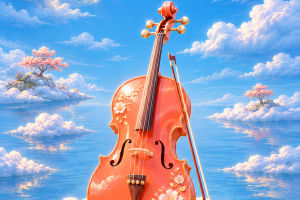
Hey Lykkers! If you have ever sat in an orchestra concert and tried to tell the violins apart from the violas, you are not alone. They look almost identical. They are both held under the chin, both played with a bow, and both have four strings. But once you know what to look for, the differences become obvious.
The violin and the viola are like siblings. They share a lot of DNA, but they have very different personalities. Let's break down the key differences so you can tell them apart and understand why both are essential to the music.
Size: A Matter of Inches
The most visible difference is size. The viola is larger than the violin. A full-size violin has a body length of about 14 inches, while a full-size viola is usually between 15 and 16.5 inches. That might not sound like a lot, but when you are holding the instrument under your chin, those extra inches make a big difference.
The larger size means the viola's strings are longer and thicker. This is what gives the viola its deeper, richer sound. It also means the viola is heavier and requires more physical effort to play. Players with smaller hands or shorter arms sometimes find the viola more challenging to hold.
Tuning: A Fifth Apart
The two instruments are tuned differently. The violin is tuned in fifths: G, D, A, E. The viola is also tuned in fifths, but it starts a fifth lower: C, G, D, A.
This means the viola has a lower range. Its lowest string is a C, which is a full fifth below the violin's lowest string, the G. The viola can play notes that the violin simply cannot reach. This lower range is what allows the viola to fill in the middle of the harmonic spectrum in an orchestra.
Tone: Bright vs. Warm
The tone of the two instruments is distinctly different. The violin is bright, clear, and penetrating. It can cut through an entire orchestra with a single note. It is the instrument of soaring melodies and virtuosic solos.
The viola is warmer, darker, and more mellow. Its tone is often described as rich or chocolatey. It does not have the same piercing quality as the violin, but it has a depth that is incredibly satisfying. The viola is the instrument of harmony, of inner voices, and of quiet emotional moments.
The Clef: Reading the Notes
Here is a difference that is not obvious from looking at the instruments. Violin music is written in the treble clef. Viola music is written in the alto clef.
The alto clef places middle C in the center of the staff. This makes sense for the viola because its range sits right in the middle of the musical spectrum. Violinists who switch to viola have to learn a new way of reading music, which can be a challenge. But for viola players, the alto clef is second nature.
Role in the Orchestra
In an orchestra, the violin and viola have different jobs. The violins are usually divided into two sections, first and second. The first violins carry the melody. The second violins play harmony and counter-melodies.
The violas sit between the violins and the cellos. They fill in the middle, providing harmony, rhythm, and texture. They are the glue that holds the string section together. They do not always get the spotlight, but the orchestra would sound thin and incomplete without them.
Which One Should You Play?
If you are thinking about learning one of these instruments, the choice depends on what you want.
If you love the idea of playing the melody and having lots of solo opportunities, the violin might be for you. It has a huge repertoire of solo music and is featured prominently in almost every genre.
If you love the idea of playing a supporting role and creating rich, warm harmonies, the viola is a wonderful choice. It is also a great option for violinists who want a new challenge. Many violinists switch to viola later in their careers and find it deeply rewarding.
Final Thoughts
The violin and the viola are both beautiful instruments with their own strengths and personalities. The violin is the star, the soloist, the melody maker. The viola is the supporter, the harmonizer, the one who adds depth and warmth. They are different, but they need each other. Together, they create the full, rich sound that makes orchestral music so magical. So the next time you see an orchestra, take a moment to appreciate both. They are both essential, and they are both wonderful.