Hey Lykkers! When you watch an orchestra, your eyes are probably drawn to the violins at the front or the shiny brass at the back. The violas, sitting just to the right of the violins, often go unnoticed. They don't usually get the soaring melodies or the flashy solos.
But if you listen closely, you'll realize something important. The viola is the heart of the orchestra. It's the glue that holds everything together. Let's take a closer look at why this instrument is so essential and why it deserves more credit than it gets.
The Middle Child of the String Family
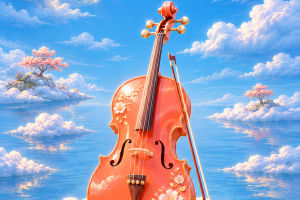
The viola sits right in the middle of the string section. It's larger than a violin but smaller than a cello. Its voice is deeper and warmer than a violin, but not as low as a cello. This middle position is exactly what makes it so valuable.
In an orchestra, the violins often carry the melody. They are the stars, the ones you hum along to. The cellos and basses provide the foundation, the low notes that ground the music. The viola bridges the gap between them. It fills in the middle, adding richness and depth that would be missing otherwise. Without the viola, the orchestra would sound thin and unbalanced.
The Master of Harmony
One of the viola's most important jobs is playing harmony. While the violins play the tune, the violas play the notes that support it. They create the chords and the textures that make the melody sound full and beautiful.
Think of it like a painting. The melody is the bright colors, the main subject. The harmony is the background, the shading, the subtle tones that give the picture depth. The viola is a master of these subtle tones. It doesn't need to shout to be heard. It works quietly in the background, making everything else sound better.
The Inner Voice
The viola also often plays what musicians call the "inner voice." This is a melody that isn't the main tune, but it's still important. It might be a counter-melody that weaves around the main theme, or a repeating figure that adds movement and interest.
These inner voices are what make orchestral music so rich and complex. They add layers of sound that you might not notice at first, but you would definitely miss if they were gone. The viola is a natural choice for these parts because its tone is distinctive but not overpowering. It can be heard without dominating.
Why Composers Love the Viola
Composers have always understood the value of the viola. They know that it can add warmth to a cold passage, or a touch of melancholy to a joyful one. Its tone is often described as deep or nasal, but in a good way. It has a character that is unique and expressive.
Many composers have written beautiful solos for the viola, showing off its range and emotion. But even in the background, the viola is doing essential work. It is the instrument that fills the gaps, smooths the edges, and brings the whole orchestra together.
The Unsung Hero
The viola doesn't get the glory. It doesn't get the standing ovations. But it is the unsung hero of the orchestra. It is the instrument that makes the music feel complete. It is the glue that holds everything together.
So the next time you listen to an orchestra, pay attention to the violas. Listen for that warm, middle-range sound that supports everything else. You might be surprised at how much you notice once you start paying attention. The viola is not just a supporting player. It is a vital part of the music.
Final Thoughts
The viola is a beautiful instrument with a rich, expressive voice. In the orchestra, it plays a crucial role that is often overlooked. It provides harmony, depth, and texture. It bridges the gap between the high and low strings. It is the glue that holds the music together. So let's give the viola the credit it deserves. It is a star in its own quiet way.