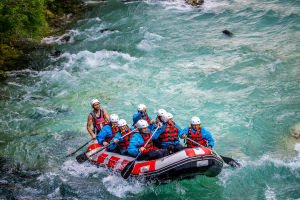
A first whitewater run can be a satisfying afternoon outside, but preparation matters. The people in the raft, the guide's instructions, and properly fitted equipment all have a part to play.
Most beginners picture a wild river and assume the boat does all the work. In a paddle raft, the crew works together to maneuver. Knowing what to wear, how to follow commands, and which water suits a beginner makes the first trip less confusing.
Start with properly fitted gear
Rent before you buy. A guided trip lets you try rafting before committing to equipment. Ask the outfitter whether the fee includes the raft, paddle, helmet, and personal flotation device (PFD), or life jacket. Check what clothing and footwear you need to bring rather than assuming everything is supplied.
If you do commit, buy the PFD first, not the paddle. Look for a whitewater-specific, Coast Guard-approved vest that fits snugly and does not ride up when pulled by the shoulders. Have the guide check its fit before launch.
Then add a whitewater-specific helmet, synthetic layers, and securely fastened shoes with good grip. Avoid flip-flops. Ask the outfitter what additional clothing the water conditions require; a synthetic top alone may not be enough. Wear the flotation vest and helmet while on the river and when scouting rapids.
Learn to read the water
Before you touch a paddle, look at the surface with your guide. A V shape pointing downstream can indicate a clearer channel between obstacles, rather than a rock beneath its point. A smooth tongue of water may suggest a route, but it is not a guarantee of a clear passage.
Holes form where water drops over an obstacle and curls back upstream; they are not simply another name for standing waves. Some can hold a raft or swimmer. Do not assume speed will carry you through. Let the guide choose the line and explain which features the crew should avoid.
Paddle as one boat
Rafting rewards coordination over strength. When your guide calls forward, everyone plants the paddle blade together. Paddles entering at the same instant help the crew respond as a unit, rather than leaving the guide to work around conflicting movements.
The bow pair usually sets the pace, and the others match it while listening for commands. Practice together before entering rapids. Ask the guide to demonstrate where to sit and how to brace your feet in that particular raft; its layout determines the position, and your feet must not become trapped.
Know the safety commands
Learn the guide's commands before launch. High side means moving promptly to the side the guide indicates to help prevent a flip. Get down means lowering your position in the raft as demonstrated. Ask where to hold on, and keep your body free of loops of rope.
If you end up swimming in shallow or obstructed rapids, float on your back with your feet high and pointing downstream. Do not try to stand in fast current, where a foot can become wedged. Follow rescue directions and actively seek a route to safety rather than simply floating indefinitely.
Rescue ropes also require instruction. Never tie or wrap a line around your wrist or body. A trained person may assist from shore with a throw bag, but carrying one does not replace rescue training. Do not jump into the current after a swimmer.
Pick suitable beginner water
Start with a guided outing suited to your experience. Class I has small waves and riffles; Class II includes easy rapids requiring some maneuvering. Neither is free of hazards. Class III requires more skilled maneuvering, while Class IV and V demand advanced or expert capability, not simply several seasons of participation.
Always run with a group, never solo. Check the difficulty rating and current flow before booking, and ask the outfitter what the water is doing now, not what it usually does in July. Ratings are only a guide: changing flows, weather, and obstacles can alter a familiar section.
Before booking, tell the outfitter about your swimming ability and rafting experience. Ask how the safety briefing and on-water practice are handled, and choose a less demanding trip if the proposed route feels beyond your comfort level.