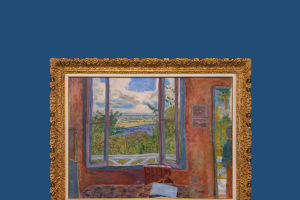
A finished painting shows the completed composition, but its surface can conceal an earlier stage of preparation.
Beneath the visible layers, artists sometimes left preliminary lines that established figures, proportions, contours, and the placement of objects.
These marks are known as underdrawings. Studying them can reveal how a composition was planned and developed, providing valuable technical evidence about the materials, methods, and decisions involved in creating a painting.
What Is an Underdrawing?
An underdrawing is a preliminary drawing applied to the prepared surface of a painting before or during the early stages of painting. It may define major contours, establish proportions, position figures and objects, or organize the composition.
The technique can vary considerably. Some underdrawings contain only a few simple lines, while others provide detailed plans for much of the finished image. Artists could also use different drawing materials, depending on their working methods and the surface being prepared.
The relationship between the underdrawing and the finished painting is particularly informative. An artist might alter a figure’s position, adjust a contour, move an object, or change the proportions of a form as the composition developed.
How Hidden Drawings Are Examined
An underdrawing is normally concealed beneath paint layers, making it difficult or impossible to see under ordinary lighting. Technical imaging allows specialists to investigate these hidden features without removing the visible surface.
Infrared reflectography is an important method for this purpose. Infrared radiation can interact differently with various materials, allowing certain preparatory marks beneath paint layers to become visible. The results depend on the materials used, so not every underdrawing can be detected through infrared examination.
Other techniques provide complementary information. Ultraviolet imaging can help examine surface materials and previous interventions, microscopy can reveal details at a very small scale, and X-radiography can provide information about the structure and materials of the painting.
Together, these methods can produce a more detailed picture of how an artwork was constructed.
Discovering Changes in the Composition
One of the most revealing aspects of an underdrawing is the difference between the original plan and the finished image.
Technical examination may show that a figure was initially placed in a different position, an object was moved, or a contour was redrawn. Changes preserved within the layers are known as pentimenti when they represent alterations made during the development of the painting.
These discoveries demonstrate that a finished composition can represent a process of adjustment rather than a completely fixed plan. Earlier decisions may remain physically preserved even when they are no longer visible on the surface.
Revealing Working Methods
Underdrawings can also help researchers study how paintings were planned and executed. The character of the lines, the choice of drawing material, the level of detail, and the relationship between preliminary marks and painted layers can all provide technical evidence.
A carefully developed underdrawing may indicate extensive preparation, while a painting with little detectable preliminary drawing may reflect a different approach to constructing the composition. Neither method should be treated as universal, since artists used varied techniques and working practices.
Underdrawing evidence can also contribute to comparisons between artworks. However, it is normally evaluated alongside other technical and historical evidence rather than being considered independently.
Supporting Conservation
Understanding the layers beneath a painting is important for conservation as well as research. Technical examination can help specialists identify materials, understand the structure of an artwork, document previous treatment, and assess features that cannot be fully understood from the surface.
Imaging records can also provide useful documentation before and after conservation work. Such records allow specialists to compare the artwork over time and preserve technical information for future study.
What the Lines Can Reveal
An underdrawing may contain more than basic outlines. Technical examination can reveal preliminary contours, construction lines, grids, transferred designs, and changes in the position or proportions of individual elements.
A grid, for example, may provide evidence that part of a composition was transferred from another preparatory design. Altered contours can show where an artist refined the shape of a figure or object during the painting process.
The absence of a detectable underdrawing is also significant. It can indicate that the artist used a different method of preparation or that the materials employed do not respond clearly to the examination technique used.
Seeing the Painting as a Process
The visible surface of a painting represents its completed appearance, while the layers beneath it can preserve evidence of its development. An underdrawing may reveal the initial structure of a composition, subsequent adjustments, and the techniques used to transform an early plan into a finished image.
For researchers and conservators, these hidden marks are part of the artwork’s physical evidence. Examining them alongside the painted surface provides a deeper understanding of how a painting was planned, constructed, and refined.