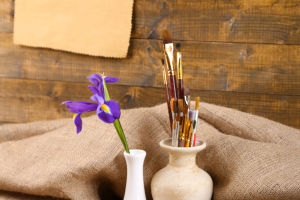
Painting does not require advanced skills or complicated subjects. Starting with approachable projects gives beginners an opportunity to understand color, shape, composition, and brushwork while enjoying the creative process.
A focused exercise can also make it easier to experiment and learn without becoming overwhelmed. From acrylics to watercolors, different mediums offer countless ways to explore these fundamentals.
The key is to choose subjects that match your current skill level and gradually introduce new challenges. These painting ideas provide an engaging starting point for building practical skills.
Paint a Simple Sunset
Sunsets are well suited to beginners because broad areas of changing color can create an impressive scene without intricate details.
Begin with the sky, blending two or three shades into a gradual transition. Add a clear horizon and a few distant silhouettes, such as hills or trees. Keep the lower portion restrained so the sky remains the visual focus.
This project develops an understanding of blending, color harmony, and basic composition.
Create a Minimalist Landscape
A landscape can be effective with only a few carefully arranged elements.
Divide the surface into sky, distant land, and a foreground area. Establish the larger shapes first, then use broader marks for distant features and more defined strokes for nearer forms.
The exercise encourages attention to scale, placement, and visual depth without requiring intricate rendering.
Paint Simple Flowers
Flowers provide an accessible way to develop controlled brushwork.
Start by suggesting petals with curved or rounded strokes rather than attempting to reproduce every feature. Add stems and leaves using narrower marks, then arrange several blooms across the surface.
Changing their size, position, and color can create variety while keeping the overall design manageable.
Explore Abstract Painting
Abstract painting removes the need to reproduce a recognizable subject, allowing greater attention to visual elements.
Choose a small selection of colors and combine geometric or organic shapes with different types of marks. Contrast broad strokes with smaller accents and leave portions of the surface relatively open.
Think about visual balance as you work. Areas with less activity can create breathing room and make prominent elements more noticeable.
Paint a Simple Sky
A sky is an effective study for learning gradual transitions and atmospheric effects.
Apply a base color across the surface and introduce another shade while the paint is still workable. Build clouds with soft, irregular forms rather than heavy outlines.
Repeat the exercise with different combinations to see how variations in color and value can change the overall character of the scene.
Create a Simple Seascape
A seascape can be constructed from a few horizontal marks and clearly defined shapes.
Establish the sky and horizon before developing the water. Use strokes of varying lengths and spacing to suggest movement across the surface instead of creating a uniform pattern.
A distant landform can provide visual structure and give the viewer a natural point of focus.
Paint Everyday Objects
Familiar objects make useful subjects for developing observation skills.
Choose an item with a distinct silhouette, such as a cup, bowl, vase, or book. First establish its proportions and position, then identify lighter and darker areas created by the direction of the light.
This exercise strengthens your ability to recognize shape, edges, highlights, and tonal variation.
Experiment With a Limited Palette
Working with a small number of colors can simplify decision-making and encourage a better understanding of color relationships.
Select two or three main hues and create lighter or darker variations as needed. Keeping the palette restrained can also give the finished work a more cohesive appearance.
Once you become comfortable with this approach, gradually expand the range of colors you use.
Paint From a Simple Reference
Choose a reference with one clear subject and only a few supporting elements.
Before applying smaller features, identify the largest shapes and establish their positions. Build the painting gradually, refining selected areas once the overall structure is in place.
This approach encourages you to see the subject as a collection of forms rather than becoming distracted by minor details too early.
Make Small Painting Studies
Working on a smaller surface can make experimentation more approachable.
Create several studies and give each one a different goal. You might alter the arrangement, color selection, brush size, or degree of detail from one attempt to the next.
Comparing these studies can reveal which techniques and approaches produce the results you prefer.
Give Each Project a Purpose
Instead of trying to improve every skill simultaneously, assign a specific focus to each painting.
One session can concentrate on blending, another on controlled brushwork, and another on arranging shapes. This makes practice more deliberate and provides a clear way to evaluate your progress.
Over time, combining these individual skills will make more complex subjects easier to approach.
Easy painting projects give beginners a practical way to explore essential artistic skills without starting with demanding subjects. Sunsets, landscapes, flowers, abstract designs, skies, seascapes, and everyday objects each offer a different opportunity to work with color, form, brushwork, observation, or composition.
Choose one project that matches your current ability, concentrate on a specific skill, and allow yourself to experiment. Consistent practice will gradually expand your technical abilities and give you greater confidence when tackling more ambitious paintings.