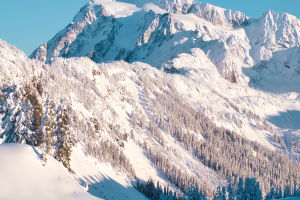
The moment you step off the chairlift and look down the mountain, colored symbols on wooden signs suddenly matter.
A green circle points left, a blue square drops straight ahead, and a black diamond disappears over a steeper ridge.
Picking the wrong direction can turn an enjoyable run into a stressful descent. Understanding trail classifications is not just about pride or ambition—it is about safety, control, and steady progress.
How Ski Runs Are Classified
Green Circle – Beginner Terrain
Green runs are designed for first-time and early-stage skiers. The slope gradient is typically gentle, often less than 25 percent incline. These trails are wide, groomed daily, and free of sharp turns or narrow sections.
Resorts intentionally place them near base areas so learners can practice stopping, turning, and controlling speed without excessive pressure. If you are still mastering the snowplow technique or linking basic turns, green terrain is where consistency is built.
Blue Square – Intermediate Slopes
Blue runs introduce moderate pitch and longer descents. Gradients are steeper than beginner trails, often between roughly 25 to 40 percent, depending on the resort. You may encounter rolling sections, variable snow texture, or narrower passages.
Skiers choosing blue terrain should already be comfortable making parallel turns and maintaining speed control on demand. If you can descend a green run without relying heavily on the wedge position, blue slopes are the logical next step.
Black Diamond – Advanced Terrain
Black diamond trails are steep, sometimes exceeding 40 percent gradient, and may include moguls, tighter corridors, or ungroomed snow. These runs require strong edge control, confident parallel skiing, and the ability to react quickly to terrain changes. On busy days, traffic can also increase complexity. Attempting black terrain without technical readiness often leads to defensive skiing, fatigue, and higher risk of falls.
Matching Terrain to Your Ability
Assess Your Stopping Ability
Before moving up a level, ask a simple question: Can you stop quickly and deliberately on your current slope? Control is more important than speed. If you struggle to stop on a green run when needed, advancing to blue terrain is premature.
Evaluate Turn Consistency
Skill progression depends on linking turns smoothly. On green terrain, you should be able to complete multiple turns in rhythm without losing balance. On blue terrain, parallel turns should feel stable rather than forced. If your turns become erratic when slope angle increases, return to easier terrain to refine technique.
Consider Snow Conditions
Trail ratings assume average conditions. However, weather significantly alters difficulty. Fresh powder may slow beginners but challenge balance. Icy surfaces increase speed and require sharper edge control. A blue run after a cold night may ski more like an advanced slope. Always factor in surface quality before deciding.
Common Mistakes When Choosing Runs
Letting Ego Decide
Many skiers attempt higher-rated runs to keep up with friends. This often results in defensive posture—leaning back, stiff legs, and reduced control. Progress is faster when terrain slightly challenges but does not overwhelm.
Ignoring Fatigue
Even skilled skiers lose precision when tired. A blue run at the end of the day may feel steeper than it did in the morning. Energy levels influence reaction time and coordination.
Misjudging Trail Layout
Some trails begin gently and steepen midway. Checking the trail map before starting provides insight into length, pitch changes, and alternate exits. Many resorts clearly indicate intersections so you can return to easier terrain if needed.
Choosing the appropriate run is not about limiting yourself; it is about building a structured progression. Confidence develops through repetition on terrain that matches your current ability. Each successful descent strengthens balance, timing, and decision-making.
Standing at the trail sign, the smartest choice is often the one that allows you to ski smoothly rather than survive the slope. Advancement happens naturally when fundamentals are solid. Select terrain that lets you finish each run feeling in control, and the mountain will gradually open more possibilities with every turn.