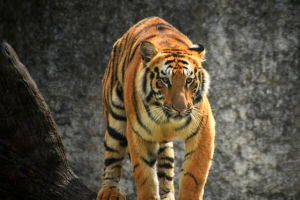
Watching a leopard move through the dappled sunlight of a forest or the tall grasses of the savannah, it's easy to understand why these big cats are considered masters of stealth.
Their spotted coats seem to dissolve into the background, allowing them to slip past both prey and predators unnoticed.
This natural concealment is not just aesthetic—it is a sophisticated survival strategy honed over millennia.
Understanding Leopard Patterns
1. The Role of Rosettes
Leopard spots, or rosettes, are more than just markings; they break up the outline of the body. In shaded forests or dense grasslands, these irregular patterns mimic shadows and light, making it difficult for prey to detect movement. Unlike uniform spots seen in other cats, the rosettes vary in size and shape, providing an adaptive advantage in multiple habitats.
2. Coat Color Variation
Leopards living in different regions exhibit variations in coat color, from golden-yellow to deep brown. These colorations align with local vegetation and terrain, enhancing camouflage. In forested areas, darker hues blend with the underbrush, while in open savannahs, lighter coats merge with dry grasses. This geographic adaptation is essential for hunting success and avoiding larger predators.
Camouflage in Hunting
1. Stalking with Stealth
Leopards rely heavily on patience. They approach prey quietly, using natural cover to remain hidden. The combination of their patterned fur and careful movement allows them to get within striking distance, often unnoticed until the last moment. Many successful ambushes occur because the prey cannot distinguish the leopard from surrounding shadows.
2. Nighttime Advantage
Being nocturnal hunters, leopards benefit from low-light conditions. Their spotted coats, combined with muted colors, make them almost invisible under moonlight or in dim forests. Prey animals, with limited night vision compared to the leopard, often fail to detect the predator until it is too late.
3. Diversified Hunting Techniques
Camouflage allows leopards to hunt a wide variety of animals, from small birds to larger ungulates. By blending into the environment, they can adjust their approach depending on the prey's awareness and habitat, demonstrating remarkable versatility in predation.
Evading Threats
1. Predator Avoidance
Although apex predators in many regions, leopards must still avoid lions and packs of wild dogs. Their camouflage enables them to navigate shared territories without direct confrontation. Remaining visually undetectable minimizes conflicts and increases survival rates.
2. Safe Retreats
Leopards often carry prey up into trees, where their spotted coat continues to provide concealment. From elevated perches, they can eat safely while remaining unseen by scavengers or competing carnivores. This strategic use of camouflage extends beyond hunting and becomes a protective mechanism.
3. Environmental Adaptation
Even as seasons change and landscapes shift, leopards maintain their stealth by adjusting behavior. In wet or snowy conditions, their movements slow, and they choose covered paths, demonstrating how camouflage is both a visual and behavioral strategy.
The secrets of leopard camouflage reveal an intricate dance between predator, prey, and environment. Their spots and coat colors are not merely beautiful patterns but vital tools for survival, hunting efficiency, and protection. Observing a leopard fade into the shadows offers more than a glimpse of elegance—it's a lesson in adaptation, patience, and the subtle power of blending with nature. Next time you venture into forests or grasslands, notice how patterns and colors influence what we see and what remains hidden, a quiet reminder of the intelligence inherent in the wild.