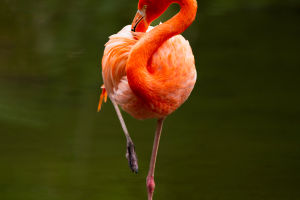
Today we explore the Great White Egret, known scientifically as Ardea alba. We often see this tall white bird standing quietly near water in wetlands, lakes, rivers, rice fields, and coastal areas.
Its distribution covers Asia, Africa, Europe, and the Americas, and in recent years it has expanded into more northern regions.
The species is listed as Least Concern, which means its population is stable for now, yet protecting wetland habitats remains essential because water pollution and land development continue to reduce natural spaces. Safeguarding its environment also supports many other species that share the same ecosystem.
Scientific Classification and Name
The Great White Egret was first described by Carl Linnaeus in 1758 with the scientific name Ardea alba. The word Ardea means heron and alba means white, clearly describing its appearance. It belongs to the heron family Ardeidae. Over time, scientists adjusted its classification, but today it is placed in the genus Ardea.
There are four recognized subspecies across different regions. Some experts suggest the Asian population might represent a separate species because of certain differences, yet most researchers still treat it as a subspecies within the same group.
Physical Features
We easily recognize this bird by its pure white feathers and tall body. It can reach about 1 meter in height, with a body length ranging from 80 to 104 cm and a wingspan between 131 and 170 cm. Its weight usually falls between 700 and 1500 grams. Compared with other large herons, it is slightly smaller than the Great Blue Heron but still appears powerful and elegant. It has a yellow bill, long black legs, and black feet.
During the breeding season, the bill may darken and delicate ornamental feathers grow on its back, creating a graceful look. Males and females share similar appearances, and young birds resemble non-breeding adults. When flying, it folds its neck back into a curved shape, a key feature that distinguishes herons from cranes or storks, which stretch their necks forward during flight. On the ground, it walks slowly in shallow water, stretching its neck forward while searching for prey.
Behavior and Feeding Habits
We observe that the Great White Egret is patient and quiet in its hunting style. It often stands motionless for long periods, waiting for fish, frogs, small reptiles, or insects to come within striking distance. Once prey appears, it quickly extends its neck and catches it with its sharp bill. This hunting strategy requires concentration and timing.
It usually hunts alone, but sometimes several individuals gather in the same area when food is abundant. During the breeding season, it forms colonies and builds nests in trees or reed areas near water. It produces low croaking sounds when disturbed, and in nesting groups it may call more frequently to communicate with mates and chicks.
Habitat and Global Distribution
We find this species in many warm and temperate regions around the world. It prefers wetlands with shallow water and rich food sources, including marshes, riversides, ponds, lakes, and flooded fields. It also adapts to artificial wetlands and agricultural landscapes. In North America, it shares habitats with the white form of the Great Blue Heron. In Europe and Asia, it often lives alongside other white herons and egrets.
Although some species look similar, differences in body size, bill thickness, and leg color help us identify them correctly. Because it has such a wide range, it plays an important ecological role by controlling small aquatic animal populations and maintaining balance in wetland ecosystems.
Subspecies and Regional Variation
We know there are four main subspecies distributed across Europe, America, Africa, and the Asia-Pacific region. The differences among them are subtle but include variations in size and breeding plumage details. The Asian subspecies sometimes attracts scientific debate because some experts consider it a separate species, yet most classifications still group it under Ardea alba. These regional variations show how the species adapts to different environmental conditions over time while maintaining its core characteristics.
Final Thoughts
We see that the Great White Egret is an elegant and adaptable bird that depends heavily on healthy wetlands. Its white feathers, long legs, and calm hunting behavior make it easy to admire. It lives across continents and adjusts to different climates while maintaining stable populations. Lykkers, have you ever seen this beautiful bird standing quietly near water?
Observing wildlife like this helps us understand nature better. Protecting wetlands means protecting the future of species like Ardea alba, and together we can support the conservation of these important habitats for generations to come.