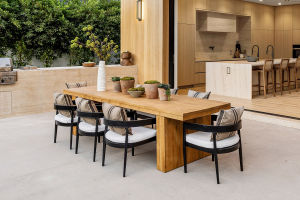
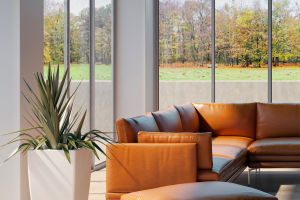
Do you ever walk from the living room into the kitchen and feel like you’ve stepped into a completely different house?
Maybe the colours, finishes, and furniture styles all change suddenly, and nothing seems to “speak” to each other. That disjointed feeling is exactly what a cohesive home aims to fix.
Big Picture
Before rearranging furniture or buying another cushion, zoom out and define the overall mood of your home. Ask: How should this home feel every day? Warm and cosy? Airy and minimal? Relaxed and coastal? Choose two to four words and keep them visible as your guiding compass.
Then gather a simple mood board—screenshots, fabric swatches, paint chips, and inspiring rooms. This isn’t about copying one photo; it’s about giving yourself a clear “design language.” From now on, every new purchase or project needs to pass the test: Does this support the mood or fight it?
Core Palette
Colour is one of the strongest tools for creating flow. Instead of choosing a completely different scheme for each room, create a flexible whole-home palette that everything draws from. Start with one or two neutrals for most walls, trim, and ceilings that work in different light conditions.
Next, pick two or three accent colours you love enough to see repeatedly—perhaps a soft green, a clay tone, and a muted blue. These do not need to appear in the same way everywhere. Maybe a cushion in the living room, a lamp base in the hallway, and art in the bedroom share the same hue.
Pay attention to undertones: if your neutrals are warm, keep accents warm too. Vary the depth instead of the undertone—lighter versions in bright rooms, deeper versions in moody spaces. Think of it as one extended paint wrapping through the house.
Echo Elements
Cohesion happens when visual ideas repeat. Aim to echo, not copy. If there is panelled trim in the entryway, consider similar profiles for doors or built-ins elsewhere. When natural wood appears in one room, echo that tone or grain in a coffee table, frame, or chair in another.
Do the same with textiles. Linen curtains in the living room might reappear as a linen bed cover in the bedroom. A jute rug in one space might be mirrored by woven baskets in another. Patterns can repeat too: small checks, or simple motifs used in different scales will tie rooms together.
Lastly, be deliberate with metals and hardware. Choosing one or two finishes—such as brushed metal plus black—helps lighting, handles, and frames feel connected even when designs differ.
Smart Transitions
Hallways, stair landings, and foyers are not just in-between zones; they are the glue that visually connects rooms. Treat them as mini summaries of the home’s palette and style. Use wall colours that bridge the shades of neighbouring rooms, or introduce an accent colour that appears in both.
Runners and small rugs in these spaces can quietly carry colours and textures forward. Artwork in a corridor might include tones from the living room and shapes or themes seen in the next room. Even a simple console with a lamp, bowl, and small plant can repeat materials used elsewhere and hint at what’s ahead.
Layout Flow
Cohesion is not only about colour; it’s also about how the home feels while moving through it. Do a slow walk from front door to main living areas. Are there bottlenecks, competing focal points, or rugs that cut off circulation? If something feels abrupt, the layout probably needs adjusting.
In open-plan spaces, use rugs and furniture groupings to define zones without blocking sightlines. Sofas, chairs, and tables should “speak” to each other across the room, not turn their backs completely. Avoid placing one very bold piece where it visually shouts over everything else in the next zone.
Sometimes the best fix is editing rather than adding. Removing one chair, rotating a rug, or shifting a shelf a few centimetres can restore flow better than buying something new.
Personal Style
A cohesive home does not mean every room is a clone. Personality is the thread that ties it all together. Choose one main style direction—maybe classic, modern, rustic, or coastal—and support it with layers that feel authentic, like vintage pieces, handmade ceramics, or family photos.
If large-scale items are bold or sculptural, let that confidence show up elsewhere too so nothing feels random. A statement armchair in the living room might be balanced by a strong headboard in the bedroom or a striking pendant in the dining room. Repeating the “energy” of a piece can be as important as repeating its colour.
Be selective with decor. If an object does not serve a function or add to the story, consider moving it to another spot or letting it go. Clarity in display allows the pieces you truly love to shine.
Slow Evolution
Creating a cohesive home is less like a quick makeover and more like building a wardrobe. It evolves over seasons and years, not weekends. Each time something new is considered, hold it up against the vision, palette, and materials already in place. If it feels like part of the same “family,” it will likely work.
Accept that tastes shift and life changes. The aim is not rigid perfection but a sense that every room belongs to the same narrative. When the front entry, living spaces, and bedrooms all feel connected yet still have their own mood, daily life becomes calmer and more grounded.
As you look around your home now, which area feels most disconnected from the rest, and what is one small change—colour, layout, or texture—you could try this week to start pulling everything into a more cohesive flow?