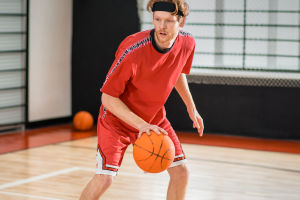
The loudest moment in a gym often isn't the perfect shot—it's the scramble that follows a miss. Shoes squeak, arms reach, and for a split second, the ball belongs to no one.
Then one player rises above the chaos and secures it with calm control.
Great rebounders don't rely on height alone. They read angles, move early, and treat every miss like an opportunity waiting to be claimed.
Master Position Before the Ball Arrives
Early contact
Wide stance
Strong balance
Rebounding success begins before the ball even touches the rim. Experienced players focus on body placement the moment a shot goes up. Instead of watching the ball's flight the entire time, they locate their opponent and establish space first. This simple priority shift often decides who gains control.
Try this positioning drill during practice:
- Stand near the basket with a partner behind you.
- When a shot is taken, step backward into the partner's path to create separation.
- Hold a low, stable stance with feet wider than shoulder width while keeping your hands ready.
This movement is called boxing out, and timing matters more than strength. Even a smaller player can secure space by moving first and staying balanced. Practicing this repeatedly trains instinct so the reaction becomes automatic during real play.
Read the Bounce Like a Veteran
Angle awareness
Soft touch prediction
Quick adjustment
Not every miss travels the same way. A shot from the corner often rebounds to the opposite side, while a short attempt may drop near the rim. Skilled rebounders study these patterns and move before others react.
You can build this awareness with a simple observation routine:
- Watch ten missed shots without jumping for the ball.
- Notice where each rebound lands based on shooting position.
- Call out the expected landing spot before the ball hits the rim.
This exercise sharpens anticipation, which is often the hidden difference between average and elite players. When your first step happens earlier than everyone else's, height becomes far less important.
Jump With Purpose, Not Just Effort
Two-foot power
High reach timing
Controlled landing
Many players jump as soon as they see the ball touch the rim. Professionals wait a fraction longer, allowing the ball to descend into reach. This patience creates cleaner catches and reduces unnecessary contact in the air.
Practice controlled jumping like this:
- Toss the ball gently against the backboard.
- Wait until it begins to fall before jumping.
- Grab it at the highest comfortable point and land softly with bent knees.
Landing under control is just as important as the jump itself. Balanced landings protect joints and allow a quick second movement, whether that's a pass, a new shot attempt, or resetting the play.
Secure the Ball Under Pressure
Strong grip
Elbows out safely
Quick decision
Winning the rebound isn't finished until the ball is protected. Crowded spaces create strips and loose balls if grip and awareness are weak. Great rebounders bring the ball close to their chest immediately and prepare the next action within seconds.
Use this protection drill:
- Grab a rebound while two partners apply light reaching pressure.
- Pull the ball firmly to your chest with both hands.
- Pivot once and make a safe outlet pass to a teammate.
This sequence builds composure. Instead of panicking, you learn to expect pressure and respond calmly. Over time, rebounds turn into fast scoring chances simply because the first pass is clean and quick.
Build Consistency Through Daily Habits
Short routines
Game-like intensity
Mental focus
Elite rebounding isn't trained only during full games. It grows through small, repeated habits that sharpen timing and determination. Even five focused minutes added to regular practice can create noticeable progress within a few weeks.
Try this compact routine:
- One minute of boxing-out footwork without jumping.
- Two minutes of bounce-reading observation from different angles.
- One minute of controlled jump-and-grab repetitions.
- One minute of rebound protection and outlet passing.
Because the routine is brief, it's easier to repeat consistently. Consistency transforms effort into instinct, and instinct is what shows up when the game speeds up.
Rebounding carries a quiet kind of pride. It rarely earns the biggest cheers, yet teammates feel its impact immediately. Extra possessions appear, momentum shifts, and confidence spreads across the floor. When you begin to anticipate every miss and move without hesitation, the game feels slower and more open. That moment—when the ball seems to find your hands again and again—isn't luck. It's the reward for doing the small, disciplined work that others overlook.