Have you ever looked at a painting and felt like you were stepping into the subject's world?
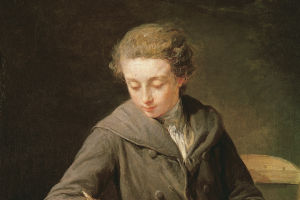
Jean-Baptiste Camille Corot's Portrait of Louise Claire Sennegon, the future Madame Charmois, does just that.
Corot, famous for his landscape paintings, created a portrait that is both delicate and captivating, revealing the sitter's personality with a grace that invites deeper reflection. The portrait of Louise Claire is a fine example of 19th-century portraiture, blending the elegance of the subject with the artist's distinctive style. It's not just a simple depiction; it's an intimate glimpse into a moment frozen in time.
The Art of Capturing Character
Corot's Portrait of Louise Claire Sennegon is much more than just a depiction of a young woman; it's an exploration of her personality. During this period, portraiture was about showcasing the inner world of the subject, not just their outer beauty. What stands out about this portrait is how Corot captures Louise Claire's delicate yet confident demeanor.
Expression and Poise
Corot's skill in capturing the subtleties of his subject's expression is evident here. Louise Claire's serene yet thoughtful gaze suggests an inner strength and intelligence, rather than just passive beauty. Her calm expression combined with her poised posture reflects not only the elegance expected of a young lady of her time but also her personal dignity. The way Corot frames her, with her head slightly tilted and her gaze directed to the side, suggests contemplation, inviting the viewer to wonder what she is thinking.
A Window Into the Subject's World
Unlike the stiff, formal portraits of earlier centuries, Corot's work shows a softer, more approachable image of the subject. The absence of elaborate backgrounds and excessive ornamentation directs the viewer's attention fully to the subject, making the portrait feel intimate and personal. This simplicity in composition, combined with Louise Claire's natural beauty, gives us a sense that we are glimpsing a real moment in her life.
Actionable Tip: When creating your own portraits, consider focusing on your subject's expression and posture. A slight tilt of the head or a subtle gaze can transform the portrait into a powerful representation of personality.
Subtle Use of Color and Light
One of the most striking features of this portrait is Corot's masterful handling of color and light. The colors are soft and muted, giving the painting an almost ethereal quality. This isn't just a result of Corot's technique; it also speaks to the way he viewed the world around him. His approach to color in portraiture was informed by his landscape works, where he captured the quiet beauty of nature with an emphasis on light and atmosphere.
Soft Tones and Harmonious Palette
The subtle use of warm, earthy tones in Louise Claire's clothing and the background complements the delicate tones of her skin. The soft browns and golds of her dress provide a contrast to the pale complexion of her face, bringing a warmth to the portrait that suggests a quiet, peaceful mood. The muted colors also help create a timeless quality, allowing the viewer to focus on the subject without distraction.
Light as a Narrative Tool
Corot's use of light is particularly effective in this painting. The soft, diffused light falls gently on Louise Claire's face, highlighting her features without harsh shadows. This creates a sense of depth, making her appear almost three-dimensional. The light seems to embrace her, enhancing her beauty while also adding an element of calmness to the scene. This gentle illumination helps convey a sense of tranquility, suggesting a moment of quiet introspection.
Actionable Tip: When using light in your own artwork, experiment with soft, diffused lighting to create an intimate and calming effect. Consider how light can shape the mood of your portrait and guide the viewer's focus.
Composition: The Balance of Simplicity
Corot's Portrait of Louise Claire Sennegon is notable not just for its technical skill, but also for its sense of balance. The composition of the portrait is both simple and striking. The artist doesn't rely on complicated backgrounds or intricate props; instead, he uses a few elements to create a harmonious, balanced image.
Minimalist Composition
The simplicity of the background, with its soft, neutral tones, allows the subject to stand out without distraction. By not overwhelming the viewer with unnecessary details, Corot emphasizes the subject's grace and elegance. The empty space around Louise Claire directs attention to her, making her presence feel even more pronounced. This minimalist approach also reflects a trend in portraiture during the 19th century, where artists began to focus more on the subject and less on elaborate settings.
Natural Framing
Corot's decision to have Louise Claire seated in a relaxed posture creates a sense of naturalness and fluidity. She is not rigidly posed but instead appears comfortable and at ease, giving the portrait a more informal and personal feel. This framing emphasizes the subject's personality rather than simply her appearance, allowing her inner life to shine through.
Actionable Tip: When working on a composition, think about how you can simplify elements to draw the viewer's attention where it matters most—the subject. Experiment with how space and positioning can convey a sense of ease or formality.
Timeless Elegance: More Than Just a Portrait
At first glance, the Portrait of Louise Claire Sennegon seems like just another beautiful depiction of a young woman. However, as we dive deeper into the piece, we realize that it's much more than a surface-level portrait. Corot's ability to capture the subject's soul, combined with his sensitive handling of light, color, and composition, transforms this portrait into a work of art that speaks beyond the canvas. It invites us into Louise Claire's world, showing not just her outward beauty but also the calm, contemplative person she was.
The portrait serves as a reminder that the true power of art lies not in simply replicating what we see, but in interpreting the essence of a moment. Corot's portrait shows us how subtlety, simplicity, and thoughtful technique can evoke a deeper connection with the subject.
Actionable Tip: When creating art, think about the message you want to convey beyond the physical appearance of your subject. How can you use light, color, and composition to highlight the emotional or personal aspects of the subject?
Corot's Portrait of Louise Claire Sennegon stands as a testament to his mastery of capturing the essence of his subjects. It reminds us that true portraiture goes beyond technique—it's about telling a story, revealing personality, and creating an emotional connection with the viewer. Whether you're an artist or an art lover, this portrait invites reflection on the beauty of simplicity and the timeless power of subtlety.